
About
A doctrine sung rather than written
Santo Daime began in the Brazilian Amazon in the first decades of the twentieth century, around a man from Maranhão named Raimundo Irineu Serra. It has a sacrament, a calendar, a uniform and a hierarchy — but what it does not have is a book of doctrine. What it has instead is hymns, thousands of them, held to be received rather than composed. This site is an archive of those hymns and an attempt to explain the practice around them.
What it is
A syncretic Christian tradition, in its own self-understanding rather than only in an observer's. Practitioners describe themselves less as adherents of a new religion than as Christians with access to an unusually powerful sacrament, and speak of a doctrine — a path — rather than a set of dogmas.
The sacrament is a drink made from two Amazonian plants: the vine jagube (Banisteriopsis caapi), also called cipó, and the leaf rainha (Psychotria viridis), also called chacrona. Mestre Irineu renamed it Daime in 1931, from the imperative dai-me — give me — that opens the prayer sung in the hymns: give me strength, give me love, give me light. Within the tradition it is understood not as a substance but as a teacher.
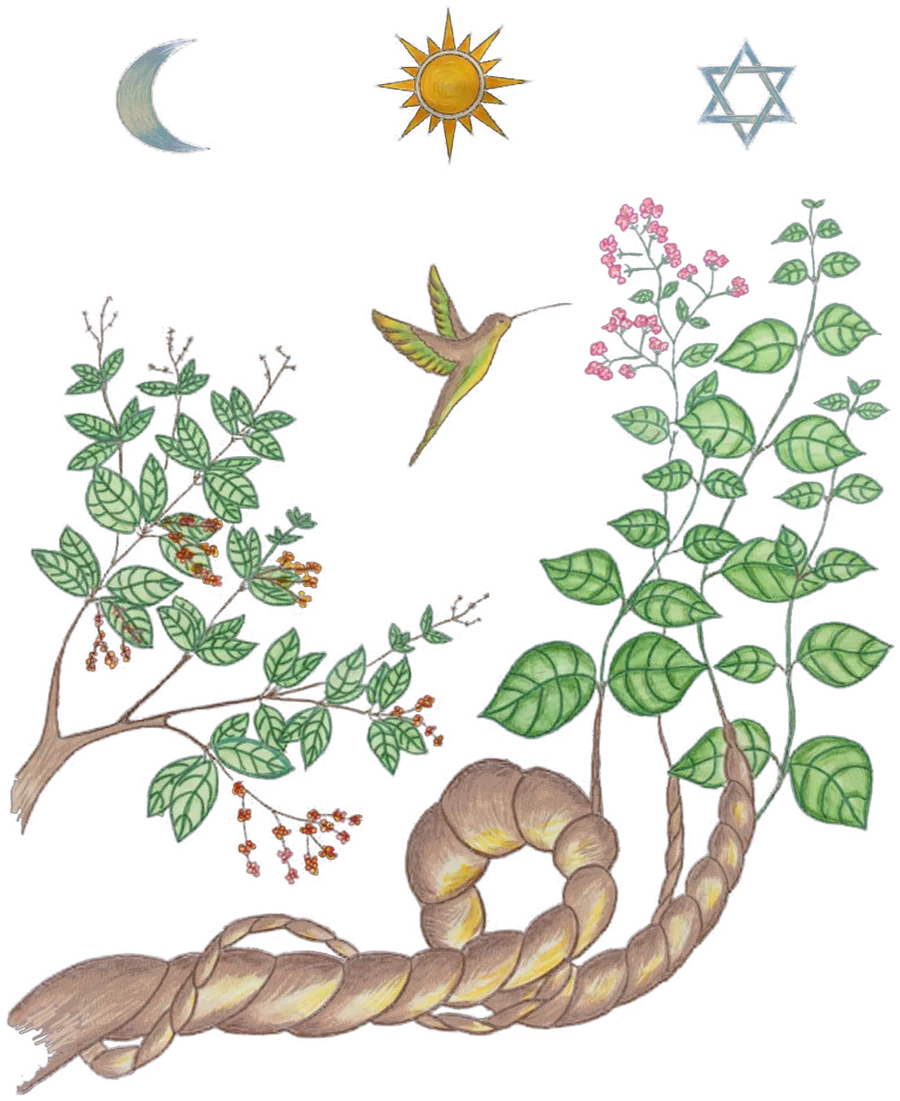
Everything else grows from that and from the hymns. Works last hours and sometimes most of a day. Members wear a uniform and stand in ranked lines. Prayers open and close every session, and the Catholic calendar sets the year.
Where it came from
Mestre Irineu was born in São Vicente Ferrer, Maranhão, in 1890 — the date on the baptismal registry, though he gave 1892 himself and the tradition has never fully settled it. He left home in his teens, worked his way into the Amazon, served on the Brazil–Peru boundary commission, and came to ayahuasca in Acre around 1914 through Antônio Costa, a fellow Maranhense, who had learned of it from a Peruvian ayahuasquero.
During a forest diet he saw a woman in the moon who gave him a hymn and the instruction to found a doctrine. He knew her first as the Queen of the Forest and later named her as Our Lady of the Conception. The first documented open work was held on May 26, 1930; the first hinário was sung on the vigil of Saint John in 1935; the dance came in 1936, after six months of rehearsal. He received his last hymn in December 1970 and died on July 6, 1971.
What met in that one lifetime was Brazilian popular Catholicism, Amazonian vegetalismo, the Afro-Brazilian religion of his Maranhão childhood, Kardecist Spiritism and the esoteric societies of São Paulo. Santo Daime is not a synthesis anyone designed. It is what happened.
The lines
There is no single Santo Daime. Succession after 1971 was disputed and remains so, and the differences between lines are real ones about practice, not only about authority. This site does not adjudicate between them.
- Alto SantoThe original community outside Rio Branco, founded on land the fraternity moved to in 1945 and led by Mestre Irineu until his death. The centre was formally CICLU — Centro de Iluminação Cristã Luz Universal, a name the Esoteric Circle in São Paulo settled on in 1963 after rejecting his own proposal, Centro Livre. Practice here stays close to a plain Christian form.
- ICEFLUConstituted as CEFLURIS in 1974 under Padrinho Sebastião, after a rupture over how to answer official persecution, and later renamed. This is the line that went out from the Amazon: Céu do Mapiá was founded in 1983, and churches followed in Brazilian cities, then in Europe, North America and Japan. Umbanda works are part of ritual practice here in a way they are not at Alto Santo.
- BarquinhaFounded by Daniel Pereira de Matos, whom Mestre Irineu cured in 1937 and who then took a separate path, kept in friendship. A distinct tradition rather than a branch of this one.
Within ICEFLU and alongside it, individual churches are grouped under their own registered bodies — CEFLI at Fortaleza, CICLUMIG in Minas Gerais, CEFLURGEM, CEFLUSMME at Céu do Mar, CEFLULC at Teresópolis. The initials are administrative rather than doctrinal, and the hinário register records them because the documents themselves do.
Where the churches are
The hinários in this archive name the churches they were received in. Listed here are the larger of those in Brazil, where ritual use of the drink has had legal standing since the early 1990s. Churches in other countries are left out — not because they do not exist, but because this site will not publish a directory of gatherings in places where the legal position is unsettled, rests on a single case, or is against them.
Brazil
Ritual use of the drink has been lawful in Brazil since the early 1990s, when the federal drugs council removed it from the prohibited list after its own commissions of inquiry.
- Céu do Mapiá AmazonasSeat of ICEFLU, founded January 21, 1983 on the Mapiá stream off the Purus; about a thousand residents, inside a national forest since 1989.
- Alto Santo Rio Branco, AcreThe original community, on the land the fraternity moved to in May 1945. Mestre Irineu lived and died here.
- Colônia Cinco Mil Rio Branco, AcreThe satellite Mestre Irineu authorised Padrinho Sebastião to establish in 1968.
- Céu do Mar Rio de JaneiroSeat of CEFLUSMME and one of the first churches outside Acre.
- Céu da Montanha Visconde de Mauá, Rio de Janeiro
- Flor da Montanha Lumiar, Rio de Janeiro
- Céu do Dedo de Deus Teresópolis, Rio de Janeiro
- Céu da Fortaleza CearáSeat of CEFLI.
- Céu da Lua Cheia Brazil
This is a list of places the hymns came from, not an invitation or a directory. It is not legal advice, the legal position changes, and nothing here says anything about whether a given church is open to visitors.
What is here
The archive holds 178 hymnal and liturgical documents — 7,773 hymns and 266,043 lines of lyric, in Portuguese and English. Where a hymn exists in both languages the page gives you a toggle; where it exists in only one, it does not.
Where the sources disagree — about a date, a hymn count, the colour worn at a particular work — the pages say so rather than choosing quietly. There is a fair amount of that.
History & roots
From Maranhão to Alto Santo, dated where the sources agree and flagged where they do not.
Doctrine
What the tradition teaches, and where those teachings came from.
Works
The ritual forms and the calendar that governs them.
Hymns
The hinários themselves — the tradition's scripture, in Portuguese and English.
Symbols
The cross, the star, the flag, and what each is held to mean.
Fardamento
The uniform, and what it means to receive one.
Glossary
The vocabulary, kept with the traditions it came from.
What this site is not
It is not a guide to attending a work, and it gives no instruction on preparing or taking the sacrament. It does not offer medical or legal advice, and it is not a directory of where to find a church. The hymns are published because they are the tradition's own text and because reading them is the most direct way to understand what the doctrine actually says. Everything else on the site exists to give them context.