
An educational introduction
A doctrine sung rather than written.
Santo Daime has no book of doctrine. It has hymns — 7,773 of them here, in Portuguese and English, exactly as their documents hold them. Everything else on this site exists to give them context.
A reading path
A guided way into the material.
Begin with the overview, then follow whichever question brought you: the history, the teachings, the works, or the hymns themselves.
This site describes a practice rather than inviting anyone into one. It gives no guidance on attending a work, no medical or legal advice, and no directory of gatherings.
Choose a path
Choose a section to open.
About Santo Daime
What the tradition is, where it came from, and how the lines differ.
History & roots
From Maranhão to Alto Santo, dated where the sources agree and flagged where they do not.
Doctrine & principles
The seven principles, the hymns as revelation, and the Daime understood as a teacher.
Works
Concentration, bailado, mass and healing, and the calendar of feasts.
Rituals
The hall, the prayers, the three dance steps, the vivas, and who does what.
Hymns & hinários
7,773 hymns in Portuguese and English, read from the source documents.
Authors
The people who received the hymns, and the hinários that are their spiritual biographies.
Symbols
The Cross of Caravaca, the six-pointed star, the flag and the altar.
Fardamento
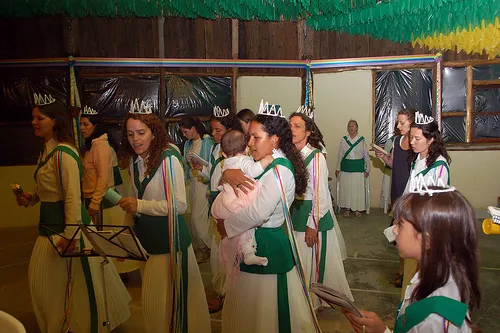
The white and blue farda, the star, and the ceremony that confers them.
Glossary
The vocabulary, kept with the traditions each word came from.
History
It begins with one man walking out of Maranhão.
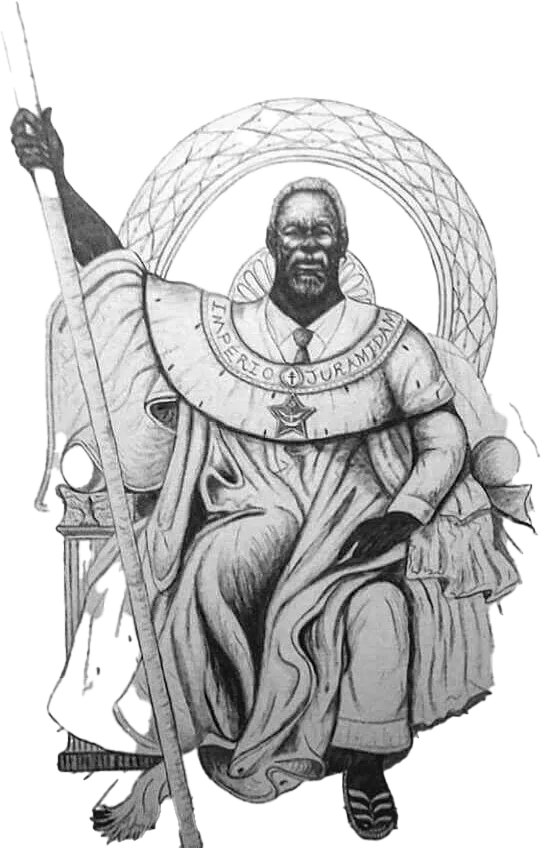
Raimundo Irineu Serra left home in his teens, reached Acre in 1912, and saw a woman in the moon who gave him a hymn and told him to found a doctrine. He received his last hymn in December 1970.
Read his life →